
Robot T440
 Raspberry Pi CM4
Top-tier vehicle terminal and enterprise Wi-Fi roaming — Extensive software options, browser rendered applications to native solutions
The T440 is the flagship of the vehicle-mounted Robot range, extending the T430 with Wifi roaming connectivity. Engineered for the most demanding fleet and packhouse-logistics deployments — forklifts, AGVs, and roving fixtures that must stay connected as they move across large facilities. It carries our Linux application platform forward on current hardware - with support for barcode scanner with various application profiles to choose from. The device comes with an extensive software ecosystem, easy to use backend web GUI, various software boot options from Desktop, Native Robot App to Browser as default startup.
Key features
Raspberry Pi Based Compute Module 4 with Broadcom BCM2177 quad-core Cortex-A72 (ARM v8) 64-bit SoC @ 1.5Ghz
2GB to 4GB RAM and 16GB to 32GB EMMC flash, depending on the model
Enterprise-grade roaming Wi-Fi — dual-band Wi-Fi 5 with sub-100 ms handover (802.11r/k/v)
Auxiliary peripheral connectors (RFID, scanners)
Phone-based captive-portal setup — no app or laptop required
Industrial-grade ruggedized construction for harsh packhouse environments
Integrated barcode scanning powered serial ports for automated data capture
7" Capacitive touch display with toughend glass and 5 point touch
1 x Powered +5V RS-232 port
Realtime clock with battery backup
Web UI to setup your application
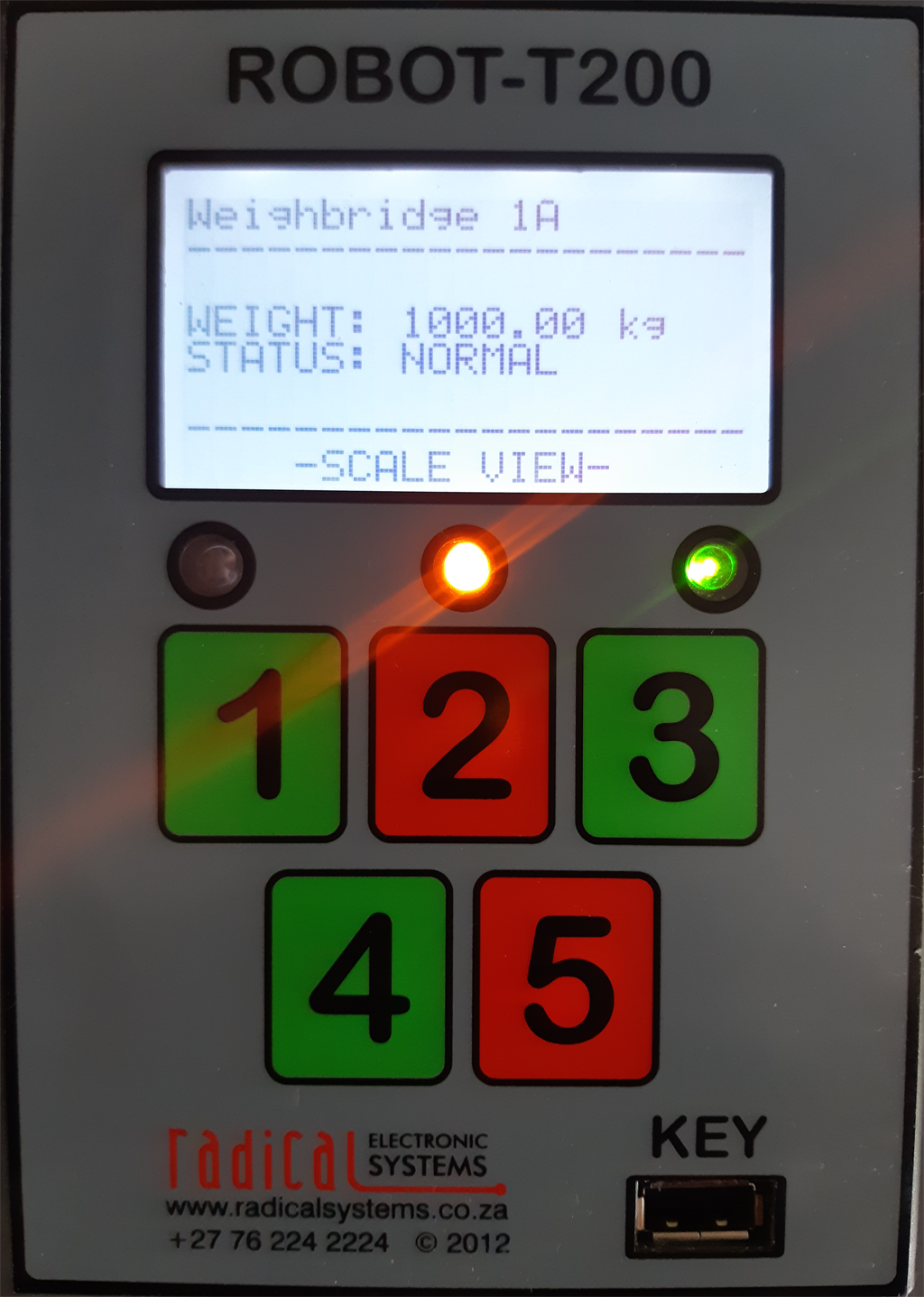
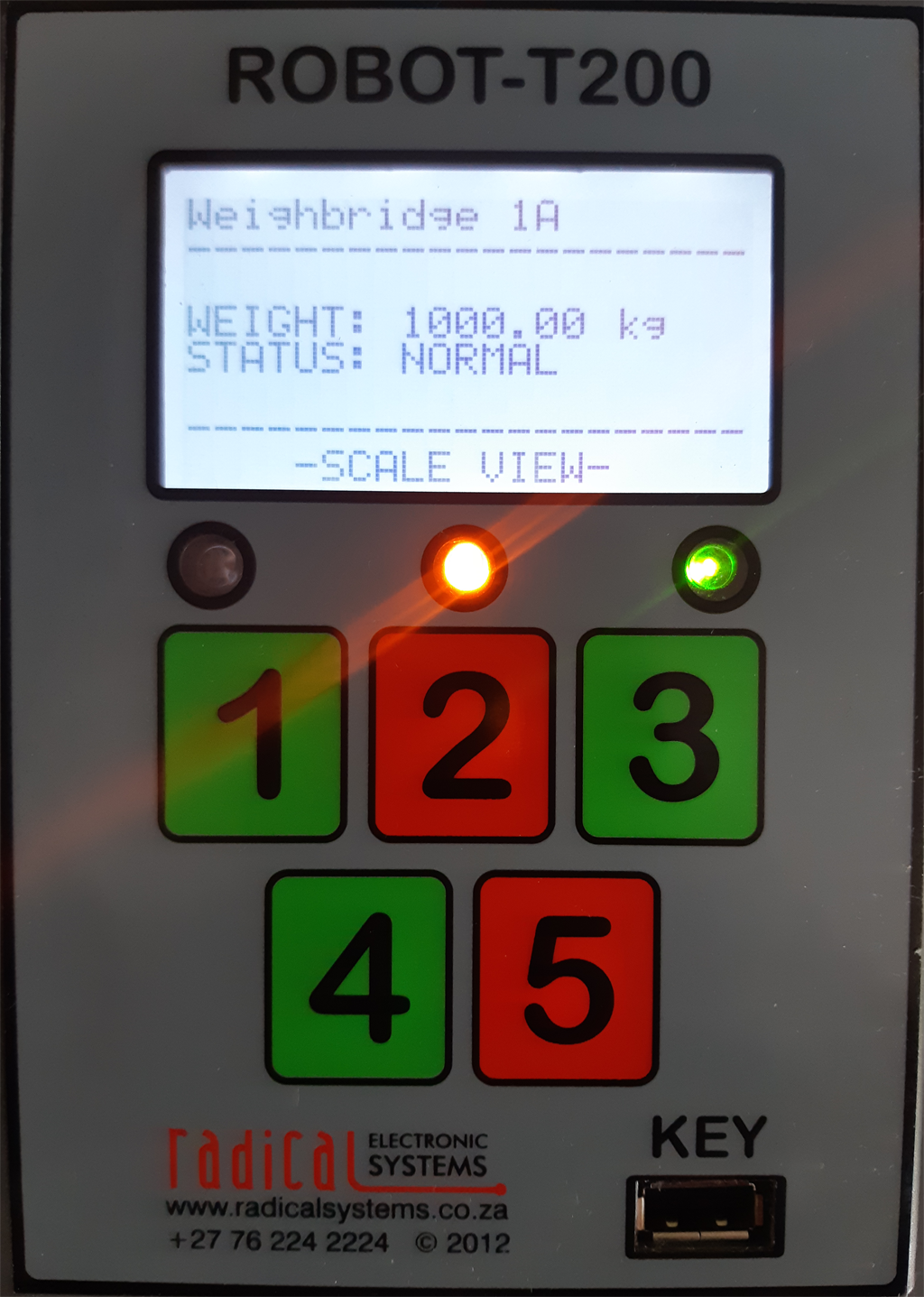
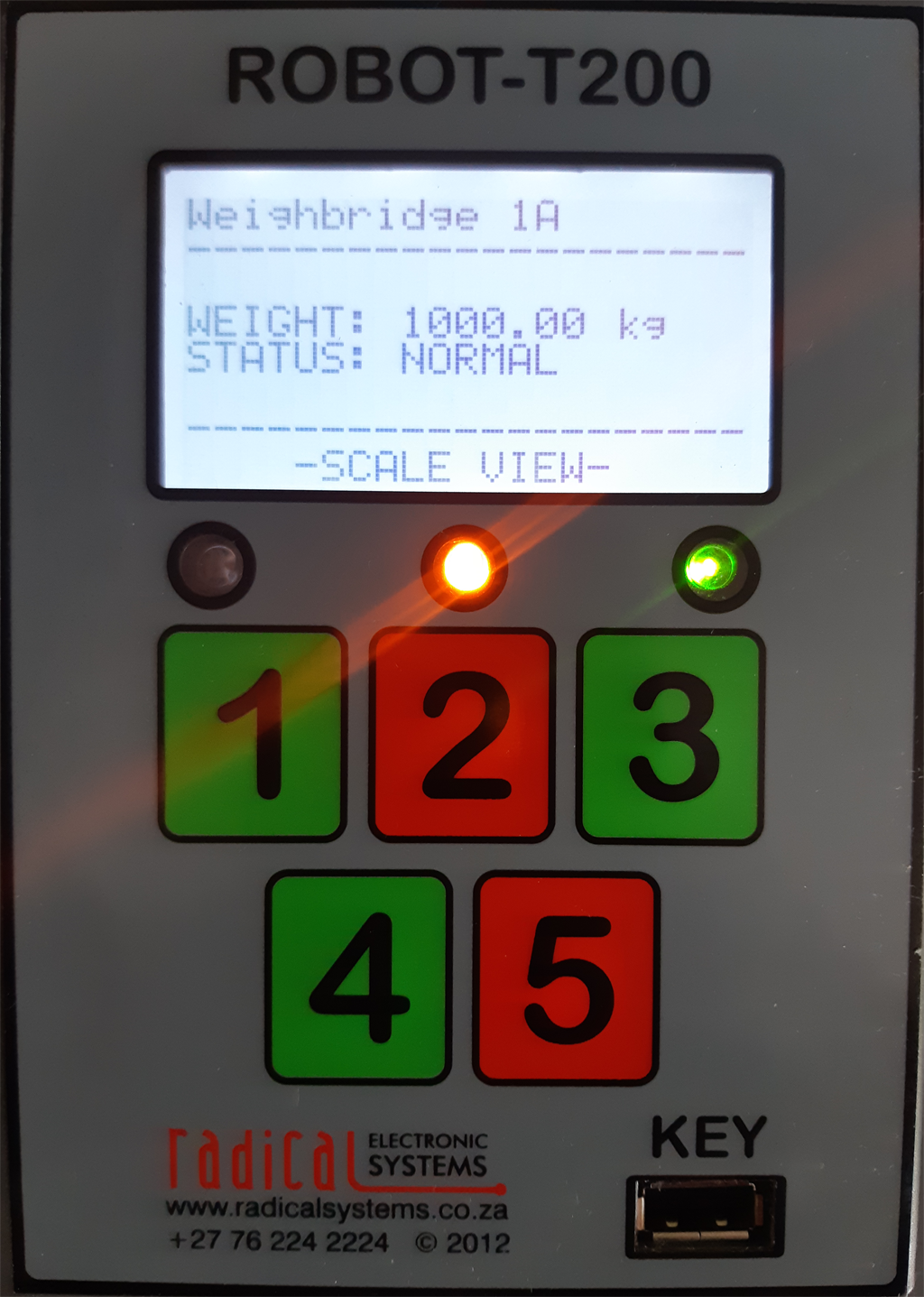
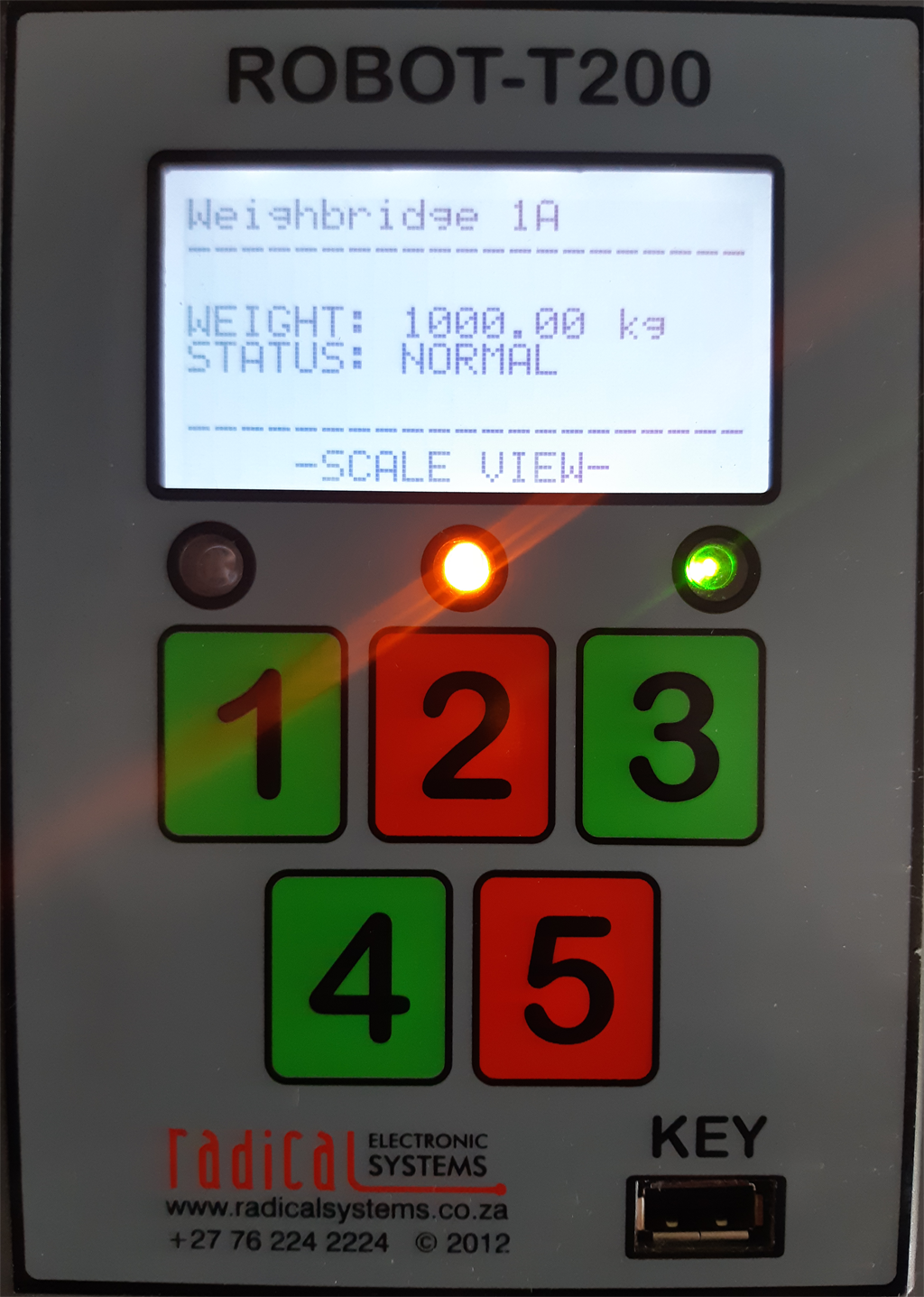
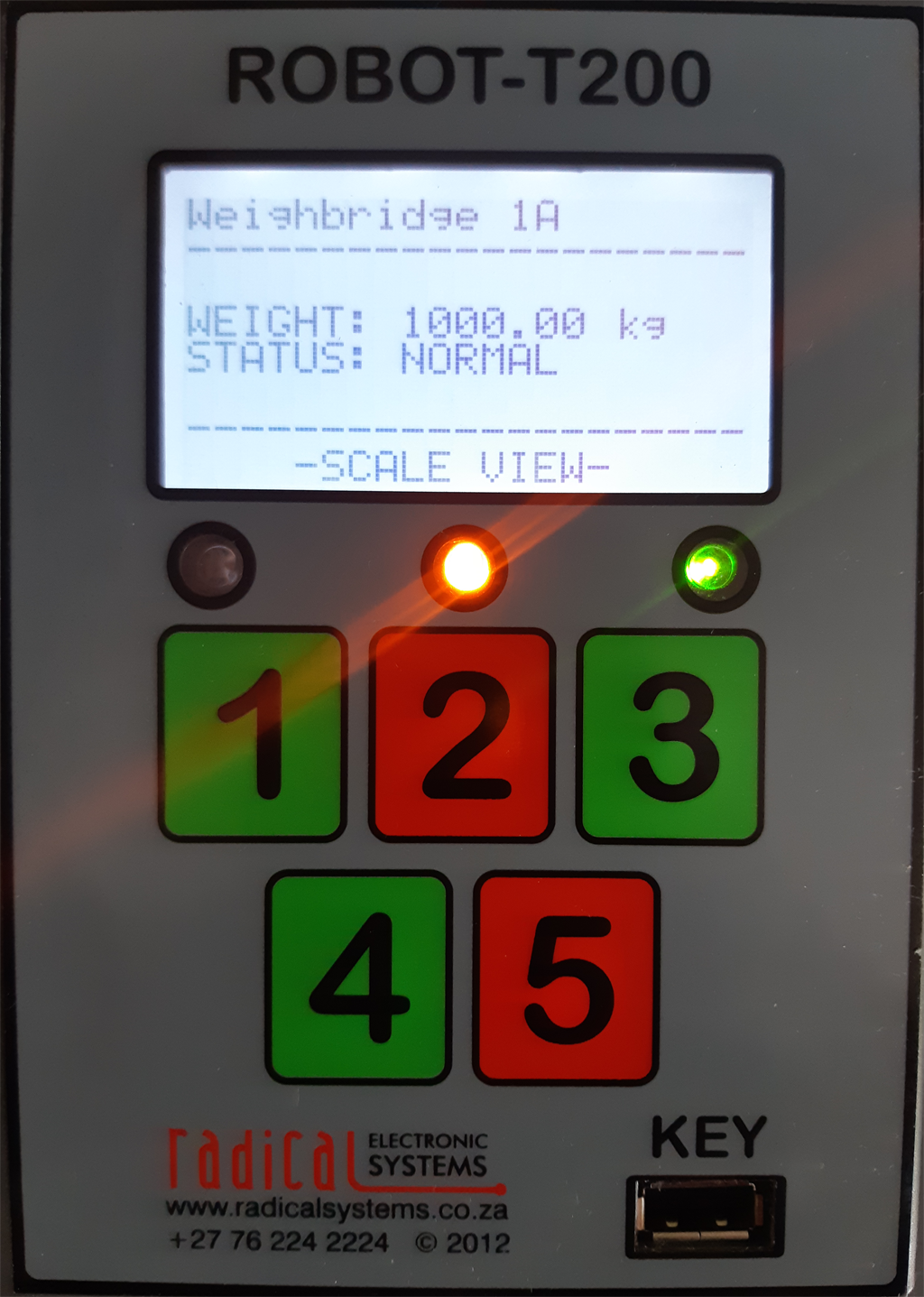
T440 in action
Applications
Forklift & AGV terminals — keep moving equipment connected across the full coverage map
Handheld scanners & PDAs — picking, putaway, and cycle-count flows with no session drops
Mobile packhouse stations — roving QC and weighing fixtures that follow the line
Cold-store & warehouse logistics — uninterrupted scanning across multi-AP facilities
Distribution & yard operations — coverage gaps no longer mean dropped transactions
Stock movement — track where forklifts fetch bins and place them
Built for mobile equipment
The T440 carries the Robot architecture onto moving equipment. Where the T430 covers fixed stations on LAN, the T440 is purpose-built for fleets in motion: forklifts crossing a cold-store, roving terminals moving between zones, roving QC and weighing fixtures.
Everything else in the Robot product line plugs in unchanged — the same application profiles, the same JSON-over-HTTP transactions, the same Robot SCADA & IOT Server fleet management.
Wi-Fi connectivity
The defining feature of the T440 is its enterprise-grade Wi-Fi subsystem, designed to keep mobile equipment online across an entire facility — not just within one access point’s coverage.
Why it matters
Most Wi-Fi solutions are designed for a desk, not a moving vehicle. They camp on one access point and only look for a better one once the connection has already failed — by which point a forklift has already driven through a dead spot and dropped its session.
The T440’s comms board is built around the opposite philosophy: stay ahead of the signal. It continuously tracks every access point in range, pre-authenticates with the best candidates, and hands over to a stronger AP before the current one fades — typically in under a tenth of a second, with no visible interruption to the application.
Radio specification
| Item | Specification |
|---|---|
| Standards | 802.11 a / b / g / n / ac (Wi-Fi 5) |
| Bands | 2.4 GHz + 5 GHz (dual-band) |
| MIMO | 2 × 2 |
| Peak data rate | 867 Mbps (80 MHz, 5 GHz, 2 × 2) |
| Channel widths | 20 / 40 / 80 MHz |
| Module | Ezurio ST60-2230C (Sterling-70 family) |
| Host platform | Raspberry Pi Compute Module 4 (CM4 I/O board) |
| Host OS | Raspberry Pi OS (Bookworm) |
| Antennas | 2 × U.FL, external |
T440 Wi-Fi vs. onboard Raspberry Pi Wi-Fi
The standard CM4 (and Pi 4/5) onboard radio is fine for a stationary device on a single access point. It was never designed for mobile equipment crossing a multi-AP facility. This is the gap the T440 closes.
| Onboard Pi Wi-Fi | T440 Wi-Fi | |
|---|---|---|
| Chipset | Broadcom/Cypress CYW43455 | Marvell 88W8997 (Ezurio Sterling-70) |
| Standards | 802.11 b/g/n/ac | 802.11 a/b/g/n/ac |
| Bands | 2.4 / 5 GHz (one at a time) | 2.4 / 5 GHz dual-band |
| MIMO | 1 × 1 | 2 × 2 |
| Peak data rate | ~433 Mbps | 867 Mbps |
| Antennas | Single (internal or 1× U.FL) | 2 × external U.FL |
| 802.11r Fast Transition | ✗ | ✓ |
| 802.11k Neighbor Reports | ✗ | ✓ |
| 802.11v BSS Transition | ✗ | ✓ |
| Proactive roaming engine | ✗ (scan-on-failure only) | ✓ ranked candidates, roam-on-trend |
| Typical handover time | 1–2 s (often a dropout) | < 100 ms |
| WPA3-Enterprise / 192-bit Suite-B | Limited | ✓ |
| Cisco CCX support | ✗ | ✓ |
| Designed for | Stationary devices | Mobile equipment in motion |
The headline difference isn’t raw speed — it’s that the onboard radio only looks for a better access point after the current one has already failed. The T440 is always roam-ready, so a forklift driving through a coverage gap hands over seamlessly instead of dropping its session.
Roaming — the core capability
Built for environments where a device travels continuously between access points: warehouses, cold stores, packhouses, distribution centres, and manufacturing floors.
Standards-based fast roaming
| Standard | Capability | Benefit |
|---|---|---|
| 802.11r (Fast Transition) | Pre-authenticates and pre-keys candidate APs | Handover drops from 1–2 seconds to under 100 ms |
| 802.11k (Neighbor Reports) | AP advertises which neighbouring APs exist | Client skips slow blind scans — finds the next AP instantly |
| 802.11v (BSS Transition) | AP can steer the client to the optimal AP | Network-assisted load balancing and band steering |
Together: 802.11k tells the device where to look, 802.11v advises when to move, and 802.11r makes the move fast.
Proactive roaming engine
Beyond the standards, the T440 runs an active candidate-management loop that keeps the device permanently roam-ready:
- Maintains a ranked list of every known access point for the current network.
- Scans the best candidates first instead of sweeping the whole band.
- Polls signal strength continuously to catch degradation early — before it becomes a dropout.
- Roams on a sustained improvement, with hysteresis to prevent ping-ponging between two equally-strong APs.
- Prefers the 5 GHz band when signals are comparable, steering the device onto the less-congested band automatically.
- Tunable per site — scan cadence, signal thresholds, and roam aggressiveness can be matched to each deployment’s RF layout.
Real-world handover behaviour
| Scenario | Result |
|---|---|
| 802.11r fast roam | < 100 ms — imperceptible to the application |
| Standard reassociation fallback | 200–600 ms |
| Signal degradation | Detected and acted on before the link drops |
| AP-initiated steering (802.11v) | Honoured automatically |
Security
| Security mode | Supported |
|---|---|
| WPA3-Personal (SAE) | ✓ |
| WPA3-Enterprise (incl. 192-bit Suite-B) | ✓ |
| WPA2-Personal (PSK) | ✓ |
| WPA2-Enterprise / 802.1X (EAP-TLS, PEAP, TTLS, MSCHAPv2, EAP-FAST) | ✓ |
| OWE (encrypted open networks) | ✓ |
| Protected Management Frames (802.11w / PMF) | ✓ |
| Fast Transition on PSK and Enterprise (FT-PSK / FT-EAP) | ✓ |
Cisco CCX extensions are supported for Cisco-centric RF environments.
Provisioning & deployment
- Zero-touch field setup. On first boot — or after a Wi-Fi reset — the device raises its own setup hotspot. Connecting a phone to it opens a setup page automatically (captive portal); IT staff pick the network, enter the password, and the device joins. No app, no laptop, no cable.
- Static or DHCP addressing — configurable from the setup page to suit site networking policy.
- MAC identification — the setup page shows the device’s Ethernet MAC for asset-sticker matching during fleet rollout.
Regulatory
- Country-specific channel and power limits enforced via a signed regulatory database, configurable per deployment region.
- Operates within the strictest of factory, driver, and regional limits.
Ready to get started? Don't know how to scale!
Talk to our engineering team about deploying the Robot T440 in your packhouse.
Contact us →